Walking down the grocery aisle, you pick up a carton of milk, a bag of chips, or a can of soup. Your eyes instinctively dart to a small printed date somewhere on the packaging. For most consumers, this date is the ultimate arbiter of an item's fate—it either goes in the cart or gets left on the shelf. If it's in the fridge at home and that date passes, it's often summarily dismissed into the trash. But what does that date actually mean? The common misconception is that it's a hardline indicator of safety, a point after which the food becomes dangerous. The reality, however, is far more nuanced and hinges on a critical, yet widely misunderstood, distinction: the difference between a "Best Before" date and a "Use By" date. Understanding this difference is not just a matter of semantics; it's a key to reducing food waste, saving money, and making informed decisions about what we consume.
To the average person, the phrases "Best Before," "Use By," "Sell By," and "Expires On" might seem interchangeable, all pointing toward an inevitable conclusion of inedibility. This confusion is a significant contributor to the global food waste problem. In the United States alone, it is estimated that confusion over date labels contributes to a staggering amount of perfectly good food being thrown away each year. The truth is, these labels are not federally regulated for most products (with the notable exception of infant formula) and are not primarily intended as safety warnings for consumers. Instead, they are often determined by the manufacturers themselves and are more about optimal quality than imminent danger. Unraveling this system requires a closer look at the two most common protagonists in this story: quality versus safety.
Let's start with the Best Before date. This is perhaps the most misunderstood label. When you see "Best Before [Date]" on a package of pasta, cookies, canned goods, or even frozen vegetables, you are looking at the manufacturer's estimate of how long the product will retain its peak quality and flavor. It is a guarantee of freshness, not of safety. The food company has tested its product and determined that up until that date, the item will taste, smell, and texturally perform exactly as intended. After that date, the quality may begin to decline. The crackers might become slightly stale, the cereal may lose a bit of its crunch, or the dried spices might slowly lose their potent aroma. This degradation is a slow process of quality diminishment, not a sudden onset of rot or pathogen growth. Foods with a high shelf life—dry, canned, frozen, and otherwise shelf-stable products—almost always carry a Best Before date. Consuming these foods after their "Best Before" date is typically not a safety hazard; it just might not provide the perfect sensory experience the producer wanted you to have.
On the other side of the coin is the Use By date. This label carries much more weight and is the one consumers should pay closer attention to from a safety perspective. You will typically find a "Use By" date on perishable items that have a much shorter shelf life and are more susceptible to the growth of harmful pathogens. This includes fresh meat, poultry, dairy products like milk and yogurt, prepared salads, and some cheeses. This date is the manufacturer's strongest recommendation regarding the last date the product should be consumed for reasons of safety. After this date, the risk of bacterial growth such as Salmonella, E. coli, or Listeria increases significantly. These microorganisms often do not produce obvious signs like off-odors or slimy textures in their early stages, making them invisible hazards. Therefore, adhering to "Use By" dates is a crucial practice for preventing foodborne illness. It is a line drawn much more firmly in the sand than its "Best Before" counterpart.
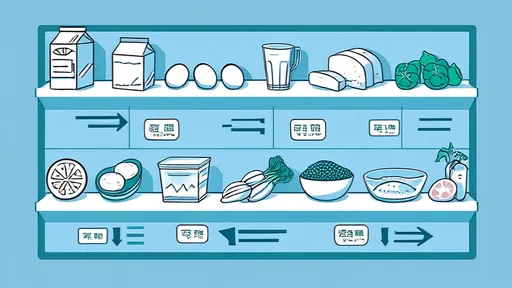
The environment in which you store your food acts as a powerful variable that can dramatically alter the timeline suggested by these dates. A date label is printed under the assumption of proper storage conditions. The "Best Before" date on a bag of coffee beans is valid only if the bag remains sealed in a cool, dark place. If you leave it open on a sunny countertop, the quality will degrade far faster than the date predicts. Similarly, the "Use By" date on a package of chicken is meaningless if the product has been left in a hot car for an hour after purchase, allowing bacteria to multiply to dangerous levels long before the printed date. Refrigeration at or below 40°F (4°C) is critical for perishables. The "danger zone" for bacterial growth is between 40°F and 140°F (4°C and 60°C). The clock on a "Use By" date ticks much faster if a product is stored improperly, rendering the printed date obsolete. Your vigilance at the store—picking the coldest milk from the back of the display case—and your diligence at home—refrigerating promptly—are the essential partners to any date label.
So, with this knowledge, how should you navigate your kitchen? For products with a Best Before date, employ your senses. If the date has passed, open the package. Look at the food. Does it appear normal? Smell it. Does it have a fresh, expected aroma, or is it off-putting? Taste a small amount. Has the flavor deteriorated? For canned goods, also check for signs of spoilage like bulging lids, rust, or severe dents. Your senses are a powerful and reliable tool for judging quality. A bag of chips that's a week past its date might be less crispy but is unlikely to harm you. For products with a Use By date, a stricter policy is wise. While proper storage might grant a small grace period of a day or so for some items like milk (which will unmistakably sour when spoiled), it is generally safest to dispose of perishable foods like raw meat, poultry, and fish once the "Use By" date has passed. The potential risk is not worth it. When in doubt, throw it out—this old adage holds particularly true for safety-dated items.
The implications of this misunderstanding extend far beyond the confines of our individual kitchens. The confusion between quality and safety dates is a direct driver of needless waste. Supermarkets, bound by regulations and quality agreements, are often forced to pull products from shelves as their "Best Before" dates approach, leading to massive amounts of edible food being discarded. Consumers, fearing illness, do the same at home. This waste has enormous environmental consequences, contributing to greenhouse gas emissions in landfills and representing a tremendous squandering of the resources—water, land, energy—used to produce that food. Advocacy groups and some policymakers are pushing for standardized labeling to clarify this issue, such as using "BEST If Used By" to clearly indicate quality and "USE By" to indicate safety. Education is the first and most powerful step toward change. By becoming smarter shoppers and more informed users of the food we buy, we can collectively reduce waste, save money, and make our food system more sustainable. The next time you check a date, remember: it's not just a deadline, it's a message. Your job is to understand what it's really trying to say.

By /Aug 20, 2025

By /Aug 20, 2025
By /Aug 20, 2025

By /Aug 20, 2025

By /Aug 20, 2025

By /Aug 20, 2025
By /Aug 20, 2025
By /Aug 20, 2025

By /Aug 20, 2025
By /Aug 20, 2025

By /Aug 20, 2025
By /Aug 20, 2025

By /Aug 20, 2025

By /Aug 20, 2025

By /Aug 20, 2025

By /Aug 20, 2025

By /Aug 20, 2025

By /Aug 20, 2025

By /Aug 20, 2025

By /Aug 20, 2025
