In the culinary world, chestnuts often present a formidable challenge to both home cooks and professional chefs. Their tough, stubborn inner skin clings tenaciously to the tender flesh, turning what should be a delightful seasonal ingredient into a frustrating kitchen ordeal. Traditional methods of peeling—boiling, roasting, or even the tedious knife-scoring technique—often yield inconsistent results, leaving cooks with broken nuts and frayed patience. However, a revolutionary approach has emerged from experimental kitchens: the rapid steaming and roasting method. This technique promises not only efficiency but also remarkable consistency in achieving perfectly peeled chestnuts, transforming an age-old struggle into a streamlined process worthy of any modern kitchen.
The conventional wisdom for peeling chestnuts has long involved either prolonged boiling or dry roasting. Boiling tends to make the outer shell somewhat easier to remove but often leaves the inner skin soggy and adhered, requiring meticulous picking that can damage the nut. Roasting, while imparting a desirable smoky flavor, can sometimes overcook the exterior before the inner skin loosens sufficiently. Both methods demand significant time and attention, with results that vary widely based on chestnut size, freshness, and even the batch. For those preparing large quantities for stuffings, purees, or holiday dishes, these traditional techniques can become a bottleneck in kitchen productivity, leading many to seek alternatives or even opt for pre-peeled, often inferior, packaged versions.
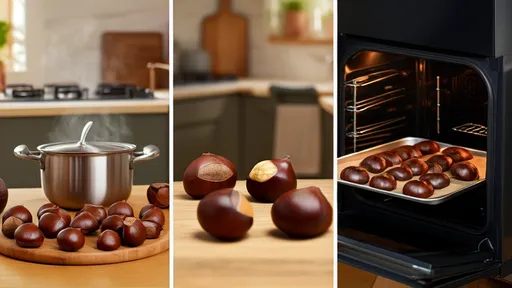
Enter the rapid steam-and-roast technique, a hybrid method that leverages the best properties of both water and dry heat. The process begins with a brief but intense steam bath. By exposing the chestnuts to high-pressure steam for a short duration—typically no more than five to seven minutes—the inner skin undergoes a dramatic transformation. The steam penetrates the microscopic layer between the skin and the nut meat, causing it to swell and separate. This crucial step doesn't fully cook the chestnut but specifically targets the adhesion of the problematic pellicle. The nuts emerge from the steamer plump and hot, their shells slightly softened.
The magic, however, is fully realized in the immediate transition to high heat. Without delay, the steamed chestnuts are transferred to a preheated oven or a hot, dry skillet. The sudden application of dry heat causes the now-separated inner skin to contract and crisp further, while the residual moisture from steaming rapidly evaporates. This creates a micro-environment within the shell where the pellicle pulls away completely from the flesh. The result, after a brief roast of just ten to twelve minutes, is a chestnut that cracks open with minimal pressure, revealing a perfectly intact, golden nut with the inner skin clinging to the inside of the outer shell, not the edible part. The entire process, from steam to table, is often completed in under twenty minutes, a fraction of the time required by older methods.
Beyond sheer speed, the advantages of this method are multifaceted. The initial steaming ensures that the nut itself does not dry out, a common pitfall of extended roasting. This preserves the chestnut's natural moisture, yielding a final product that is tender and creamy, not chalky or brittle. The subsequent roasting step is not about cooking the nut through but about finishing the job of separating the skin and adding that classic, toasted chestnut aroma and flavor. This two-stage approach effectively decouples the task of skin removal from the task of cooking, giving the chef unparalleled control over the final texture and doneness. For recipes requiring further cooking—like being added to a braise or a soup—the nuts can be peeled raw after this process and then incorporated, perfectly prepared for their next culinary stage.
Adopting this technique does require some attention to detail. The chestnuts should be scored with a sharp knife on their flat side before steaming; this allows the steam to penetrate effectively and gives the shell a predetermined weak point for easy opening later. The steaming time must be closely monitored, as over-steaming can start to cook the nut and make it mushy, undermining the textural benefits. Likewise, the roasting time must be adjusted based on the oven's true temperature and the size of the nuts. A batch of large, fresh chestnuts might need a minute or two longer in the dry heat than a batch of smaller ones. It's a technique that rewards a single test batch to dial in the perfect timing for your specific equipment and ingredients.
In conclusion, the rapid steaming and roasting method stands as a significant evolution in the preparation of fresh chestnuts. It directly addresses the primary pain point of peeling by intelligently manipulating heat and moisture in distinct phases. This method is not merely a minor tweak but a fundamental rethinking of the process, prioritizing the mechanics of skin separation above all else. It empowers cooks to handle this autumnal ingredient with newfound confidence and efficiency, ensuring that the natural sweetness and rich texture of the chestnut are preserved and highlighted, rather than being lost in a battle against its protective layers. For anyone who has ever struggled with a paring knife and a bowl of stubborn chestnuts, this modern technique is nothing short of a revelation.
By /Aug 20, 2025
By /Aug 20, 2025
By /Aug 20, 2025
By /Aug 20, 2025

By /Aug 20, 2025
By /Aug 20, 2025

By /Aug 20, 2025
By /Aug 20, 2025
By /Aug 20, 2025
By /Aug 20, 2025

By /Aug 20, 2025
By /Aug 20, 2025
By /Aug 20, 2025

By /Aug 20, 2025
By /Aug 20, 2025
By /Aug 20, 2025

By /Aug 20, 2025
By /Aug 20, 2025

By /Aug 20, 2025
By /Aug 20, 2025
