In the vibrant landscape of Asian desserts, few treats capture the imagination and palate quite like mango pomelo sago, known affectionately as Yangzhi Ganlu. This creamy, refreshing concoction has journeyed from the bustling dai pai dongs of Hong Kong to home kitchens worldwide, morphing and adapting along the way. The dialogue between its traditional, restaurant-style preparation and the myriad homemade interpretations is a fascinating study in culinary evolution, resourcefulness, and personal taste.
The genesis of this beloved dessert is often credited to the innovative chefs of Hong Kong's Lei Garden restaurant in the 1980s. The Hong Kong version is not merely a recipe; it is a meticulously crafted standard. It begins with the selection of the finest Philippine or Thai mangoes, chosen for their intense sweetness, vibrant color, and fiber-free flesh. These are blended into a luxuriously thick and smooth puree that forms the very foundation of the drink. The pomelo, a large citrus fruit, is not an afterthought. Only the finest honey pomelo is used, with its flesh meticulously separated into pristine, jewel-like sacs that offer a delightful burst of tangy bitterness to counter the mango's sweetness.
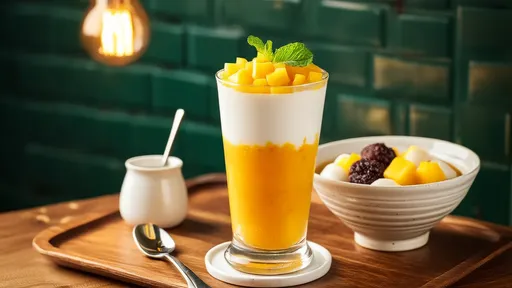
The sago, or tapioca pearls, undergoes a precise cooking process. It is simmered until just perfectly translucent with a faint white dot at the center, achieving that quintessential QQ texture—a bouncy, chewy mouthfeel highly prized in many Asian desserts. It is then shocked in ice water to stop the cooking process and ensure each pearl remains distinct. The liquid component is where true luxury lies: often a rich, silky-sweet blend of evaporated milk, coconut milk, and sometimes a touch of cream. The final assembly is an art of balance, layering sago, pomelo, and mango chunks in a glass before being crowned with the thick mango puree and creamy base. It is served chilled, a perfect, harmonious symphony of textures and flavors in a cup.
Crossing the threshold into the home kitchen, the recipe undergoes a transformation guided by pragmatism, availability, and personal health choices. The homemade version is, above all, a testament to adaptability. The strict adherence to specific mango varieties gives way to what is ripe, affordable, and available locally. Ataulfo, Kent, or even Keitt mangoes might be used, often sweetened with a bit of sugar or honey if the fruit isn't perfectly ripe. The pomelo, which can be difficult to source in Western supermarkets, is frequently substituted with grapefruit or even oranges for a different, though still pleasant, citrus note. Some opt to omit it entirely for a simpler, purely mango experience.
The dairy element sees the most variation. While some purists seek to replicate the evaporated and coconut milk blend, many home cooks lighten the dessert significantly. Whole milk, oat milk, almond milk, or even just mango juice are common substitutes, creating a lighter, less decadent, but still delicious beverage. For the vegan or lactose-intolerant, this adaptability is a gift. The preparation of sago also becomes less rigid. While the goal is still a chewy pearl, home cooks are more forgiving of slightly overcooked or undercooked batches. The sweetening agent is equally flexible, with white sugar, rock sugar, honey, or condensed milk being used based on what is in the pantry and the desired level of sweetness.
When placed side by side, the differences between the two styles are a study in philosophy. The Hong Kong version is a pursuit of an idealized perfection. It is a benchmark, a gold standard against which all others are measured. Its character is defined by intensity and luxury—the profound depth of the mango puree, the sophisticated bitterness of high-quality pomelo, and the indulgent creaminess of its dairy base. It is a dessert designed to impress, to be the standout finale of a lavish meal. Every element is optimized for maximum impact.
In stark contrast, the homemade version champions accessibility and comfort. Its character is not defined by rigid rules but by the cook's intuition and the diner's preference. It might be lighter, sweeter, tangier, or simpler. It is a dessert born of craving and convenience, often whipped up on a hot afternoon with ingredients already on hand. It forgoes the pursuit of a universal standard in favor of creating a personalized delight. A version made by a grandmother for her grandchildren, with a little extra condensed milk because she knows they love it, has a value that transcends any objective measure of authenticity.
This divergence is not a matter of one being superior to the other. They serve different purposes and exist in different contexts. The Hong Kong style represents the height of the dessert's potential as a culinary art form. It is what one experiences on a special occasion. The homemade version is its everyday counterpart, woven into the fabric of daily life. It is the version one learns to make from a parent, the version shared with friends during a summer gathering, the version adjusted to suit a toddler's palate or a grandparent's dietary restrictions. It is living, breathing, and constantly evolving.
Ultimately, the story of mango pomelo sago is a beautiful narrative about how food travels and transforms. The Hong Kong recipe provides a glorious, iconic blueprint. The global landscape of home cooking then takes that blueprint and lovingly annotates it, edits it, and sometimes completely rewrites it. This process does not diminish the original; instead, it enriches the dessert's overall story, proving that a recipe's true strength lies not just in its flavor, but in its capacity for reinvention and its ability to find a place at any table, anywhere in the world.
By /Aug 20, 2025

By /Aug 20, 2025
By /Aug 20, 2025
By /Aug 20, 2025

By /Aug 20, 2025
By /Aug 20, 2025

By /Aug 20, 2025

By /Aug 20, 2025
By /Aug 20, 2025
By /Aug 20, 2025

By /Aug 20, 2025
By /Aug 20, 2025
By /Aug 20, 2025

By /Aug 20, 2025
By /Aug 20, 2025

By /Aug 20, 2025
By /Aug 20, 2025

By /Aug 20, 2025

By /Aug 20, 2025
By /Aug 20, 2025
