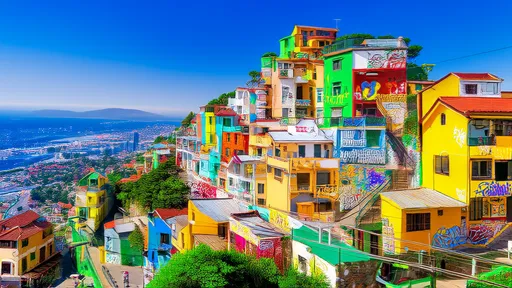
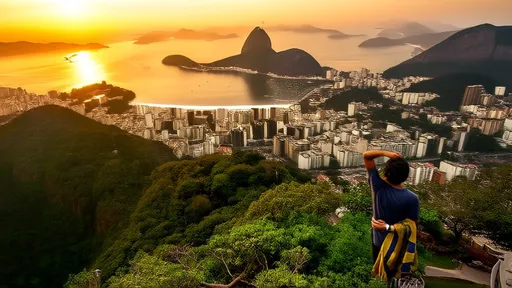
Valparaíso, Chile's historic port city, unfolds like a vibrant mosaic across forty-two hills overlooking the Pacific Ocean. Known affectionately as the "Jewel of the Pacific," its chaotic charm and kaleidoscopic energy defy simple description. This is not a city built on a grid but one that clings to the landscape, a vertical labyrinth of cobbled streets, steep staircases, and antique funicular elevators known as ascensores. The air carries a distinct blend of salt spray from the harbor, the faint scent of diesel from the bustling port below, and the aroma of freshly baked empanadas from a corner bakery. Valparaíso is a city of layers, both physical and cultural, where every peeling wall and winding alley tells a story of maritime glory, bohemian spirit, and resilient beauty.
The city's history is inextricably linked to the sea. Before the Panama Canal's opening in 1914, Valparaíso was a critical stopover for ships traveling between the Atlantic and Pacific oceans. This golden age transformed it into one of the most important commercial hubs on the continent, attracting immigrants from across Europe—British, German, French, and Italian—who left an indelible mark on its architecture, institutions, and culture. Grand mansions and banking houses rose in the flat, downtown Plan district, while the cerros, or hills, became neighborhoods for sailors, dockworkers, and merchants. The city's wealth was legendary, but its fortunes declined sharply after the canal provided a faster route. The grand buildings remained, but the flow of gold slowed to a trickle, leaving Valparaíso in a state of elegant decay for much of the 20th century.
It is from this very decay that the city's modern identity was born. As the economic sheen faded, artists, poets, and dreamers began to see the potential in the fading walls and the panoramic views. The most visible manifestation of this renaissance is the city's famous street art. Valparaíso is an open-air gallery, a global epicenter for muralism where the works of internationally renowned artists stand alongside those of local talents. The art is not mere decoration; it is a dialogue. It comments on social justice, celebrates local history, explores surreal dreams, and adds a new, dynamic layer to the city's visual fabric. A simple walk through neighborhoods like the Open Sky Museum on Cerro Bellavista becomes a journey through a constantly evolving narrative, where a vibrant, larger-than-life parrot might be painted around a corner, and a poignant social commentary might cover an entire gable end.
The geography of Valparaíso demands a unique form of urban navigation. The ascensores are the city's lifeblood, mechanical marvels dating back to the late 19th and early 20th centuries. These cable-pulled funiculars are more than just tourist attractions; they are essential public transport, hauling residents and visitors up and down the precipitous slopes. Riding the creaky, wooden car of the Ascensor Concepción or the Artillería is to step back in time, offering breathtaking, fleeting glimpses of the harbor between buildings. For the more adventurous, the city's endless staircases—many adorned with colorful tiles and graffiti—provide a more intimate, if strenuous, way to explore. Each turn reveals a new vignette: a hidden plaza, a small café with unmatched views, or a stray cat napping in a sunbeam.
At the heart of the city lies its port, the Sotomayor Plaza, a vast, open space flanked by the imposing buildings of the Chilean Navy and the Monument to the Heroes of Iquique. This is the city's formal, flat center, a stark contrast to the organic chaos of the hills. The harbor itself remains a working port, with massive container ships and fishing boats sharing the water with tourist craft. The adjacent port market, the Mercado Puerto, is a cacophony of sounds and smells, where vendors hawk fresh fish, ceviche, and traditional Chilean dishes. It’s a place of raw, unvarnished city life, a reminder that beneath the artistic veneer, Valparaíso is still a tough, salt-caked port town.
The cultural soul of Valparaíso, however, resides in its hills. Cerro Alegre and Cerro Concepción are the most famous, their winding paths lined with beautifully dilapidated mansions painted in every color imaginable. Here, boutique hotels, bohemian guesthouses, and eclectic cafes are tucked into historic homes. The air is filled with the sound of jazz drifting from an open window, the clinking of pisco sours in a cozy bar, and the animated conversations of artists and writers. A little higher up, Cerro Cárcel, the site of the city's former prison, has been transformed into a vibrant cultural park, its cell blocks now housing art studios and exhibition spaces—a powerful symbol of the city's ability to reinvent itself.
No discussion of Valparaíso is complete without mentioning its most famous adopted son, the poet Pablo Neruda. His home, La Sebastiana, on Cerro Florida, is one of his three eccentric houses and a pilgrimage site for literature lovers. The house, like the city, is a whimsical collection of oddities, with low doors, winding staircases, and windows strategically placed to frame perfect views of the bay. Neruda was drawn to Valparaíso for its "absurd, portly madness," and his spirit seems to linger in the chaotic, poetic beauty of the place. He understood that the city's magic lies in its imperfections, its refusal to be tamed or neatly categorized.
Today, Valparaíso is a city of contrasts. It is a UNESCO World Heritage Site, recognized for its unique architectural and cultural heritage, yet it grapples with the challenges of urban decay and social inequality. It is a city of profound beauty and, at times, startling grit. A devastating fire in 2014 scarred several of its hills, a stark reminder of its vulnerability. Yet, the community's resilience shines through in the ongoing reconstruction and the unwavering spirit of its people, the porteños. They possess a fierce pride and a laid-back, creative energy that is utterly infectious.
To visit Valparaíso is to surrender to its rhythm. It is to get lost in its labyrinthine streets, to stumble upon a hidden mural that takes your breath away, to share a coffee with a stranger who tells you a story about the old days. It is a city that does not reveal its secrets easily but rewards the curious and the patient. The "Jewel of the Pacific" is not a polished gem but a rough, multifaceted, and brilliantly colored stone, forever catching the light in unexpected ways. Its beauty is not in perfection, but in its vibrant, chaotic, and utterly human tapestry of life, art, and history, all tumbling down towards the endless blue of the sea.
By /Sep 28, 2025
By /Sep 29, 2025
By /Sep 29, 2025
By /Sep 29, 2025

By /Sep 28, 2025

By /Sep 29, 2025

By /Sep 29, 2025

By /Sep 28, 2025

By /Sep 28, 2025
By /Sep 29, 2025
By /Sep 29, 2025
By /Sep 28, 2025
By /Sep 28, 2025
By /Sep 29, 2025

By /Sep 29, 2025
By /Sep 28, 2025
By /Sep 29, 2025
By /Sep 28, 2025
By /Sep 28, 2025
By /Sep 28, 2025
