There are places on Earth that refuse to reveal their secrets, landscapes that hold their mysteries close, whispering only to the wind and the passage of centuries. The Nazca Desert in southern Peru is one such place. Stretching across a high, arid plateau between the towns of Nazca and Palpa lies one of the world's greatest archaeological enigmas: the Nazca Lines. From the ground, this vast expanse of reddish-brown pebbles, cleared to reveal the lighter-colored earth beneath, appears as little more than a network of shallow grooves and indistinct trails. It is a cryptic manuscript written on a colossal scale, utterly indecipherable to any earthbound observer. To truly comprehend its majesty and mystery, one must ascend. The key to unlocking this ancient puzzle lies not on the land, but in the sky.
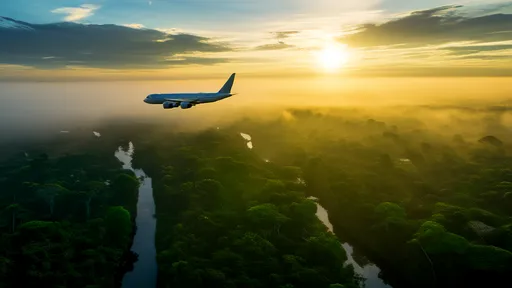
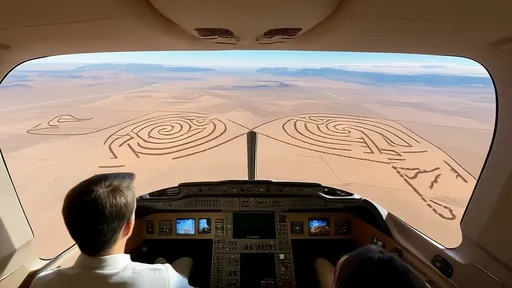
The small, bustling aerodrome near Nazca hums with a unique energy. It is not the hub of international travel but a portal to another time. Here, the aircraft of choice are not massive jets but nimble Cessnas or similar light aircraft, their wings seeming almost delicate. The ritual begins with a weight and balance check, a necessary formality that adds to the sense of a special expedition. Climbing into the compact cabin, the world immediately shrinks to the cockpit's panoramic windows. The pilot, often a seasoned local with an intimate knowledge of every geoglyph, completes the final checks as the engine sputters to life. The plane taxis to the runway, a strip of asphalt cutting through the desert, and with a growing roar, you are propelled forward, the ground falling away with a sudden, graceful ease.
As the plane gains altitude, the true scale of the Peruvian coastal plain unfolds. The rugged, brown hills give way to a vast, flat tableland, crisscrossed by dry riverbeds. For the first few minutes, the landscape below seems featureless. Then, you see it. A long, straight line, impossibly precise, cuts across the desert floor. Then another, and another. What seemed random from below reveals itself as a grand design. The feeling is nothing short of breathtaking. It is a moment of profound revelation, akin to an epiphany. You are no longer just a tourist; you are a privileged witness to a secret meant for the gods.
The pilot banks the plane gently, first to one side, then the other, ensuring passengers on both sides get an unobstructed view. The aerial ballet begins. The Hummingbird appears, its long, slender beak perfectly formed, its wings outstretched in delicate detail. It is so perfectly proportioned it seems it could take flight at any moment. Then, The Spider emerges, a giant arachnid with one leg elongated in a way that mirrors a specific species found only in the Amazon rainforest—a detail that deepens the mystery. The sheer size is staggering; these are not small drawings. The Monkey, with its characteristically spiraled tail, stretches over 300 feet. The Condor, a symbol of the Andes, has a wingspan that seems to embrace the sky itself. Each figure is executed with a geometric precision that defies explanation, especially considering their creators could never have seen their work from this vantage point.
Beyond the famous biomorphs—the animal and plant figures—the landscape is dominated by an even more perplexing array of geometric shapes. Vast trapezoids, like giant runways, stretch for hundreds of meters. Perfect triangles and rectangles intersect with spirals and zig-zag lines. Some lines run arrow-straight for miles, traversing hills and valleys without deviating, a feat of surveying that would be challenging even with modern technology. The complexity is overwhelming. It becomes clear that this is not a random collection of drawings but a single, integrated, and incredibly complex composition, a vast celestial map or ritual landscape whose meaning has been lost to time.
Theories about the purpose of the lines are as numerous as the lines themselves. The most famous, proposed by Maria Reiche, the German mathematician who dedicated her life to their study, suggests they were a giant astronomical calendar, aligned with solstices, equinoxes, and celestial bodies to mark seasons for agriculture. Others propose they were sacred pathways, walked by priests during rituals to invoke life-giving water in this parched land. More speculative ideas point to extraterrestrial involvement or complex irrigation schemes. The truth is, no single theory satisfactorily explains all the glyphs. This enduring mystery is a large part of the lines' powerful allure. Gazing down, you are not just looking at ancient art; you are staring directly into a question mark carved into the Earth by a civilization, the Nazca culture, which flourished between 200 BCE and 600 CE.
The flight is a sensory rollercoaster. The drone of the engine is a constant companion, but it fades into the background against the visual spectacle. The plane's movements, while smooth, require a steady stomach as it tilts and turns. The sun glares off the pale desert floor, and the clarity of the air at that altitude makes every detail razor-sharp. There is a palpable sense of fragility too. These lines have survived for nearly two millennia, protected by the desert's unique climate—one of the driest places on Earth, with minimal wind and rain. Yet, they are threatened by encroaching urbanization, illegal mining, and, ironically, the very tourism that allows us to appreciate them. Seeing them from the air instills a powerful sense of responsibility for their preservation.
As the plane begins its descent back towards the aerodrome, the grand figures slowly recede, merging back into the abstract patterns of the desert. The spell is broken, but the impression is indelible. The forty-minute flight feels like a journey through time. You land with a new perspective, not just on the Nazca culture, but on the capabilities of ancient humanity. The lines are a testament to human ingenuity, spiritual yearning, and a desire to create something monumental, something that would echo through the ages. They were not made for human eyes, but for something greater—perhaps the deities in the sky they worshipped. Today, from our privileged vantage point in a small aircraft, we are granted a glimpse into that sacred dialogue. The Nazca Lines do not give up their secrets easily, but for those who make the journey skyward, they offer a gift far greater than answers: a profound and lasting sense of wonder.
By /Sep 28, 2025

By /Sep 29, 2025
By /Sep 29, 2025
By /Sep 29, 2025

By /Sep 28, 2025
By /Sep 29, 2025

By /Sep 29, 2025

By /Sep 28, 2025
By /Sep 28, 2025

By /Sep 29, 2025
By /Sep 29, 2025

By /Sep 28, 2025

By /Sep 28, 2025
By /Sep 29, 2025

By /Sep 29, 2025
By /Sep 28, 2025

By /Sep 29, 2025

By /Sep 28, 2025
By /Sep 28, 2025

By /Sep 28, 2025
