Denali National Park and Preserve encompasses six million acres of Alaska's untamed wilderness, a vast expanse where the raw power of nature is on full display. At its heart stands Denali, North America's tallest peak, formerly known as Mount McKinley, whose sheer mass dominates the skyline and captivates the imagination of every visitor. This is not a park of manicured trails and convenient amenities; it is a land of profound solitude and challenge, where preparation and respect for the environment are not just advised, but essential for a safe and transformative experience.
The journey into Denali often begins long before setting foot on the park road. For the vast majority of the park, there are no trails. Travel is cross-country, across tundra, through braided river valleys, and over rocky passes. This demands a specific skillset and a significant shift in mindset from traditional hiking. Navigation by map and compass is paramount, as GPS devices can fail and the weather can change in an instant, reducing visibility to zero. The sense of freedom is immense, but it is coupled with an equally immense responsibility for one's own safety. Every step is a decision, every river crossing a calculated risk.
For those seeking to venture deep into the backcountry, the park's unique bus system along the 92-mile Denali Park Road is the primary access point. Private vehicle travel is heavily restricted, preserving the wilderness character of the landscape. Hikers board these camper buses, disembarking at a point of their choosing with little more than a wave from the driver. Suddenly, you are alone. The sound of the bus fades, and the only noises are the wind, the distant call of a raptor, and the crunch of gravel under your boots. This moment of immersion is both exhilarating and humbling.
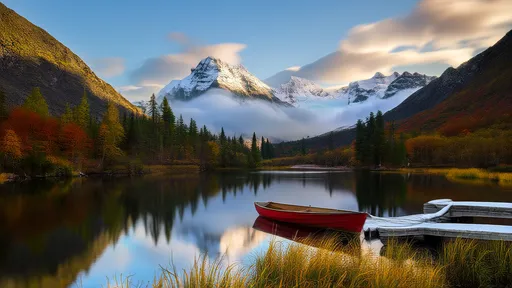
The terrain itself is a character in the story of your hike. The lower elevations are a mosaic of spruce forests and vast expanses of tundra, which in late summer erupts into a brilliant carpet of red, orange, and yellow. Walking on the tundra is a unique sensation—a springy, spongy mat of vegetation that can conceal ankle-twisting holes and small streams. Progress can be slow, but the views are endlessly rewarding. As you gain elevation, the vegetation thins, giving way to scree slopes, glacial moraines, and the stark, beautiful rock of the Alaska Range foothills.
Water is both a life source and a major obstacle. The braided rivers, fed by glacial melt, are constantly shifting. A crossing that was safe one day may be impassable the next due to rainfall or increased melt. Crossing these rivers requires extreme caution. Hikers must unbuckle their pack waist belts for a quick escape if they fall, use a sturdy pole for stability, and carefully scout for the widest, and therefore shallowest, section to cross. The water is numbingly cold, and the current is deceptively powerful. A misstep can have serious consequences in this remote environment.
Wildlife is abundant and commands respect. This is home to grizzly bears, moose, wolves, and Dall sheep. Encounters are a possibility, and proper behavior is non-negotiable. Hikers must carry bear-resistant food containers and know how to use them. Making noise while traveling, especially in areas with low visibility like thick brush or river corridors, is crucial to avoid surprising an animal. Seeing a grizzly from a safe distance is a privilege, a glimpse into a truly wild world. The goal is always coexistence, not confrontation, and that requires vigilance and knowledge.
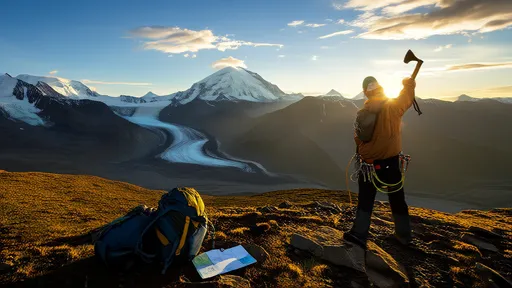
Then there is the mountain itself, Denali. For most visitors, it is a spectacle to be admired from the lowlands. Its weather is notoriously fierce, creating its own systems that often shroud the summit in clouds for weeks at a time. Catching a clear view of the entire mountain is a celebrated event. For a small number of highly experienced mountaineers, however, Denali is the ultimate objective. A climb of Denali is a major expedition, comparable to peaks in the Himalayas. It requires weeks of time, expert glacier travel skills, and the ability to withstand extreme cold and altitude.
The standard West Buttress route, while considered the "easiest" path to the summit, is still a formidable challenge. Climbers must contend with heavy loads, ferocious winds, and the ever-present risk of crevasses. Expeditions are largely self-sufficient, carrying all their supplies and establishing a series of camps up the mountain. The success rate is far from guaranteed, humbled by the mountain's sheer scale and unpredictable temperament. This is not a guided trek; it is a serious alpine undertaking that demands the highest level of physical fitness, technical proficiency, and mental fortitude.
Whether you are a day hiker exploring the tundra near the park road or an expedition climber aiming for the 20,310-foot summit, the philosophy in Denali is the same: self-reliance. Rangers are there for emergency response, but they are not guides. The onus is on the individual to be prepared. This means carrying the Ten Essentials and more—extra food, extra clothing, a repair kit, and a communication device like a satellite messenger. It means checking in with the Backcountry Information Center for the latest conditions and registering your itinerary.
The rewards for embracing this challenge are profound. There is a deep, quiet joy found in watching the midnight sun cast long shadows across a valley you have all to yourself. There is the awe of witnessing a wolf pack moving like ghosts across a distant ridge, or the simple satisfaction of successfully navigating to a high pass using only a topographic map. Denali strips away the comforts of modern life and forces a reconnection with the fundamental rhythms of the natural world.
Leaving Denali, you carry with you more than just photographs. You carry the memory of a landscape that is both beautiful and severe, a place that does not compromise. The park leaves an indelible mark, a reminder of the scale of the wild and our small but capable place within it. It is a testament to the fact that some of the greatest adventures left on Earth require not just a desire to see, but a willingness to endure, to adapt, and to walk softly in a truly grand wilderness.
By /Sep 28, 2025
By /Sep 29, 2025
By /Sep 29, 2025
By /Sep 29, 2025

By /Sep 28, 2025
By /Sep 29, 2025
By /Sep 29, 2025

By /Sep 28, 2025
By /Sep 28, 2025

By /Sep 29, 2025
By /Sep 29, 2025

By /Sep 28, 2025

By /Sep 28, 2025
By /Sep 29, 2025
By /Sep 29, 2025
By /Sep 28, 2025

By /Sep 29, 2025
By /Sep 28, 2025
By /Sep 28, 2025

By /Sep 28, 2025
